
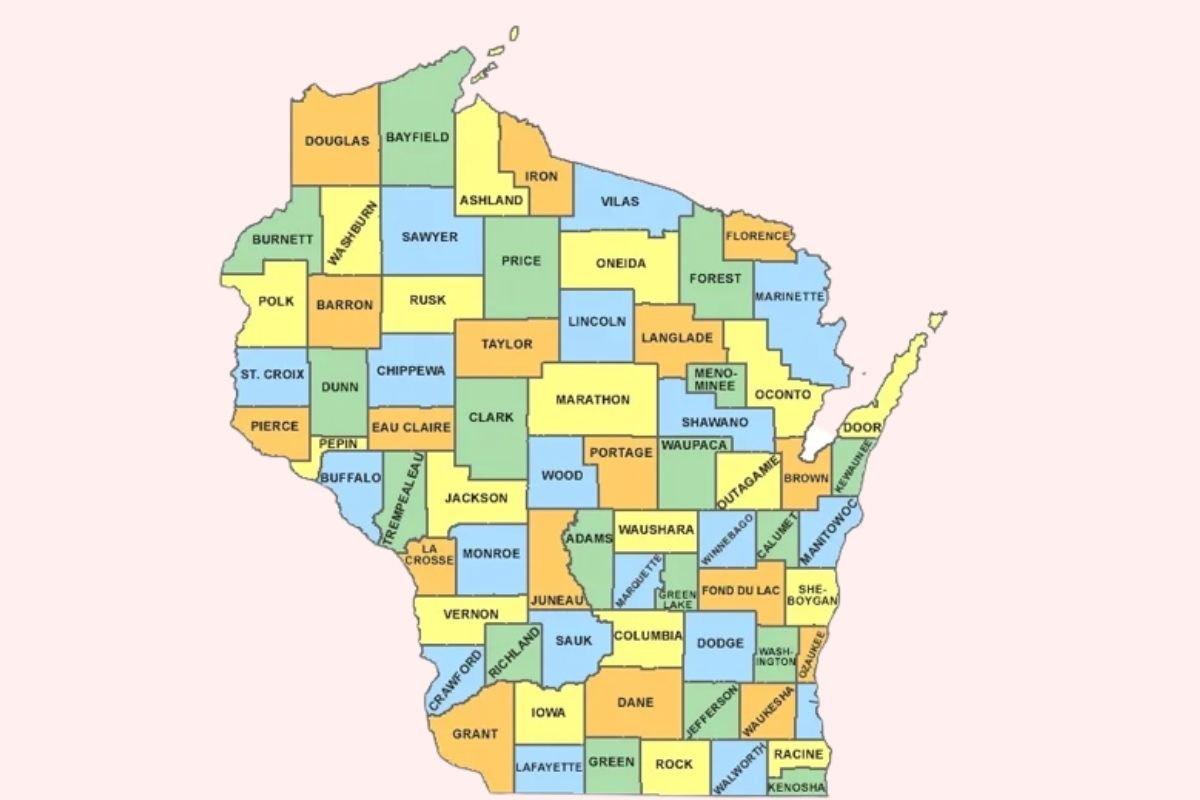
The Central Time Zone in the United States of America (USA) is the Wisconsin Time Zone. The Central Standard Time (CST) of the United States is six hours behind Greenwich Mean Time (GMT-6). Wisconsin observes DST by advancing time by one hour to Central Daylight Time (CDT), which is five hours behind Greenwich Mean Time (GMT-5).
Wisconsin’s time is adjusted back by one hour to Central Standard Time (CST) or (GMT-6) following the summer months. This post also includes the phrases “What time is it in Wisconsin” and “current Wisconsin time.”
What Time Zone in Wisconsin?
Wisconsin is located in the Central Time Zone. There are no exceptions to the state’s uniform time zone for counties and cities. Wisconsin observes daylight savings time, so there are two distinct timepieces depending on the season.
-6).
- Central Standard Time (CST): – 6:00 UTC/GMT (behind)
- Central Daylight Time (CDT): – 5:00 UTC/GMT (behind)
All adjacent states observe the same time zone. Therefore, the time does not change when crossing into Minnesota, Iowa, Illinois, or Michigan. However, you will enter the Eastern Time zone as you travel further into Michigan.
Information About the Wisconsin Time Zone
Wisconsin resides in the Central Time Zone, which observes Central Standard Time (CST) during standard time and Central Daylight Time (CDT) during daylight savings time. For more details, see the table below:
| Country | USA |
| Capital | Madison |
| State | Wisconsin |
| Wisconsin Time Zone Name | Central Daylight Time |
| Time Zone Abbreviations | CDT |
| Time Offset | UTC -5 |
| Daylight Saving Time (DST) (1 hour forward) | Sunday, March 12 2023 03:00 — Sunday, November 5 2023 01:00 |
| Daylight Saving Time Usage | Wisconsin does utilise Daylight Saving Time |
| Daylight Saving Start Date | Sunday, March 10, 2019, at 2:00 AM local time |
| Daylight Saving End Date | Sunday, November 3, 2019, at 2:00 AM local time |
| Latitude | 43.0389 |
| Longitude | -87.90647 |
Why Wisconsin Uses the Central Time Zone?
Wisconsin’s time zone is based on geography, economics, and historical decisions.
Geographic Location
Wisconsin is located in the central part of the United States, making the Central Time Zone the most practical fit.
Economic Alignment
Many of Wisconsin’s business partners and neighbouring states also follow Central Time, including Illinois, Minnesota, and Iowa. This makes coordination easier for trade and communication.
Historical Standardization
When time zones were standardised in the U.S. during the late 19th century, Wisconsin was naturally grouped into the Central Time region due to railroads and regional travel routes.
Daylight Saving Time (DST) in Wisconsin
Wisconsin observes daylight saving time, as specified by the Uniform Time Act of 1966. During daylight saving time, Central Standard Time (CST) is replaced by Central Daylight Time (CDT). It runs from the second Sunday in March to the first Sunday in November. The clock is advanced to 2:00 a.m. each March. to 3:00 a.m., resulting in a one-hour sleep loss.
In November, the clocks will be turned back an hour, from 3:00 a.m. to 2:00 a.m., providing you with an extra hour of sleep. Clocks “spring forward and fall back” is an easy way to recall the movement sequence. The whole length of daylight saving time is 34 weeks, or around 65 per cent of the year.
Effects of Wisconsin’s Time Zone on Business and Travel
Business Coordination
Wisconsin businesses often interact with:
- East Coast companies (New York, Washington D.C.)
- West Coast firms (California, Washington state)
Being in Central Time helps act as a middle ground for scheduling meetings.
Travel Scheduling
Airlines and train services use Central Time for departures and arrivals within Wisconsin. Travellers must always check destination time zones when flying out of the state.
Remote Work
With the rise of remote jobs, Wisconsin workers often coordinate with teams across multiple time zones, making awareness of time differences essential.
Coordinate a Scheduled Phone Conversation from Wisconsin to California
You can call a friend in California if you live in Wisconsin between 9:00 AM and 1:00 AM local time. This will occur between 7 AM and 11 PM their time, as California is two hours behind Wisconsin.
If you’re available at any time but want to reach someone at work in California, attempt between 11:00 AM and 7:00 PM (your time). During normal business hours, the best time to contact them is between 9 a.m. and 5 p.m.
| Wisconsin | California |
| 11:00 AM | 9:00 AM |
| 12:00 PM | 10:00 AM |
| 1:00 PM | 11:00 AM |
| 2:00 PM | 12:00 PM |
| 3:00 PM | 1:00 PM |
| 4:00 PM | 2:00 PM |
| 5:00 PM | 3:00 PM |
Frequently Asked Questions (FAQs)
Is Wisconsin in two time zones?
Four counties on the western border of the Upper Peninsula are in a different time zone than the rest of Michigan. Wisconsin, which is in the Central Time Zone, shares borders with Dickinson, Gogebic, Iron, and Menominee counties.
Is Wisconsin Central Time or Eastern Time?
Central Time Zone.
Is Wisconsin in two time zones?
Four counties on the western border of the Upper Peninsula are in a different time zone than the rest of Michigan. Wisconsin, which is in the Central Time Zone, shares borders with Dickinson, Gogebic, Iron, and Menominee counties.
Did Wisconsin change the time?
Sunday, March 12, 2023, at 3:00:00 a.m. local daylight time. On March 12, 2023, sunrise and sunset occurred approximately one hour later than the day before. The evening was brighter than daytime.
How many time zones are in the USA?
With the Fall 2019 release of the National Transportation Atlas Database (NTAD), a new map of the nation’s time zones is included, depicting the geographical boundaries of four time zones in the continental United States and five additional time zones used in Alaska, Hawaii, and other U.S. territories.
How many hours of daylight does Wisconsin have?
14 hours and 0 minutes.
Final Thoughts
Wisconsin’s position in the Central Time Zone provides consistency across the entire state, making daily life simpler for residents and easier for businesses and travellers to coordinate schedules.
As part of Wisconsin, the state’s unified time system ensures smooth communication across cities like Milwaukee, Madison, and Green Bay while also connecting efficiently with the rest of the United States.
Whether you’re travelling, working remotely, or planning events, understanding Wisconsin’s time zone helps you stay organised and avoid confusion across different regions.













[…] Related: Wisconsin Time Zone […]
Comments are closed.