
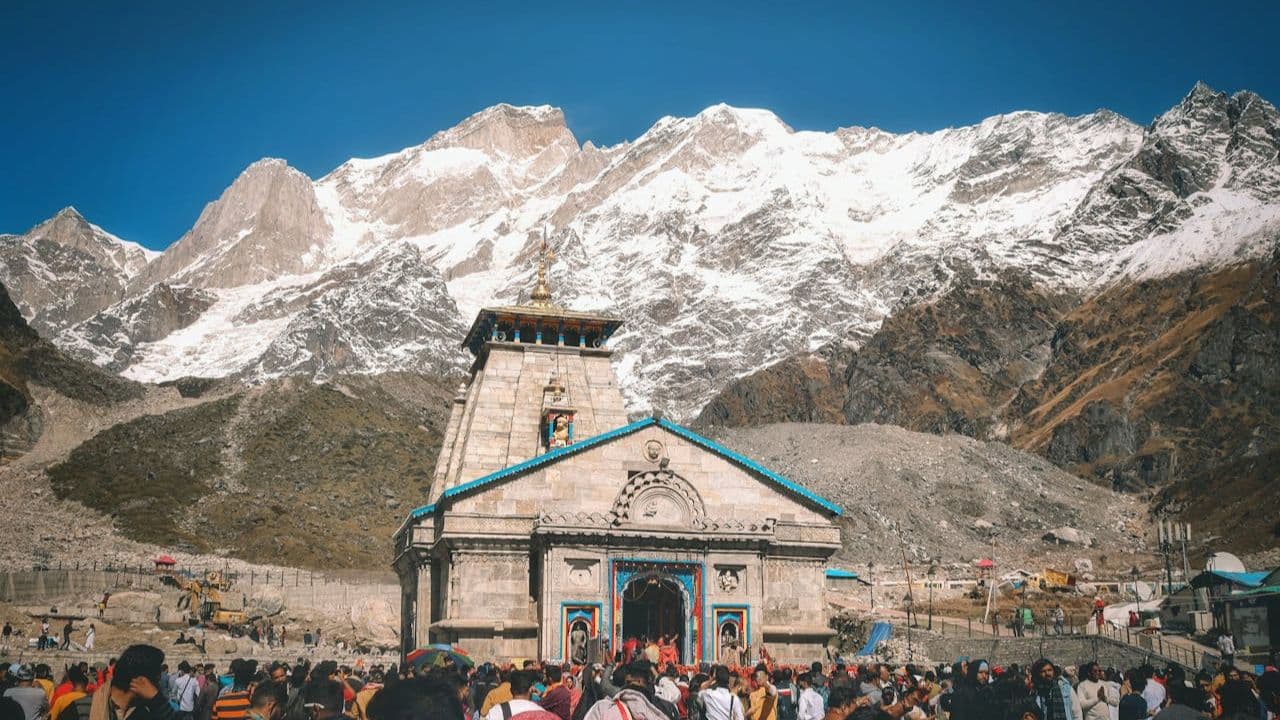
Nestled high in the majestic Himalayas, Kedarnath Temple is one of the most sacred pilgrimage sites in Hinduism. Located in the Indian state of Uttarakhand, this ancient temple dedicated to Lord Shiva attracts millions of devotees and travellers every year.
Standing at an altitude of about 3,583 meters (11,755 feet), Kedarnath Temple is surrounded by snow-covered peaks, glaciers, and breathtaking landscapes. The temple forms a vital part of the Char Dham Yatra, one of the most important religious journeys for Hindus. Pilgrims believe that visiting Kedarnath cleanses sins and brings spiritual liberation.
Beyond its religious importance, Kedarnath is also a destination of stunning natural beauty. The spiritual atmosphere, combined with the dramatic Himalayan scenery, makes this sacred shrine an unforgettable experience for travellers and pilgrims alike.
History of Kedarnath Temple
The origins of Kedarnath Temple are deeply rooted in ancient Hindu mythology. According to legends, the temple is closely connected to the Mahabharata and the heroic Pandavas.
After the great Kurukshetra War, the Pandavas sought forgiveness for the sins they committed during the battle. To atone for their actions, they searched for Lord Shiva, hoping to receive his blessings.
However, Lord Shiva did not want to forgive them easily and disguised himself as a bull to avoid them. When the Pandavas finally recognised him, Shiva dove into the ground. Different parts of his body appeared in five locations across the Himalayas, which are now collectively known as the Panch Kedar. Kedarnath represents the hump of the bull and is considered the most important among these temples.
Historically, the present temple structure is believed to have been revived or rebuilt by the great Hindu philosopher Adi Shankaracharya in the 8th century. He played a crucial role in restoring many Hindu pilgrimage sites across India and promoting spiritual unity.
The temple has stood strong for centuries despite extreme weather conditions and natural disasters in the Himalayas. Its endurance symbolises both spiritual strength and architectural brilliance.
Read: Keventers Darjeeling Travel Guide
Religious Significance of Kedarnath Temple
Kedarnath Temple holds immense religious importance in Hinduism. It is one of the Twelve Jyotirlingas, which are believed to be the most sacred abodes of Lord Shiva. Devotees believe that visiting these Jyotirlingas can bring spiritual purification and divine blessings.
The temple is also one of the four sacred pilgrimage destinations of the Char Dham Yatra, along with:
- Badrinath Temple
- Gangotri Temple
- Yamunotri Temple
Every year, thousands of pilgrims undertake this sacred journey, believing that completing the Char Dham Yatra leads to spiritual liberation or moksha.
Devotees visiting Kedarnath often perform rituals, prayers, and offerings to Lord Shiva. The spiritual atmosphere of the temple, combined with the serenity of the Himalayas, creates a powerful sense of devotion and inner peace.
Location and Geography
Kedarnath Temple is located near the banks of the sacred Mandakini River in the stunning Garhwal Himalayas.
The temple is surrounded by magnificent snow-covered peaks, including the towering Kedarnath Peak. Glaciers, alpine meadows, and rugged mountain landscapes add to the region’s breathtaking beauty.
Due to its high altitude, Kedarnath experiences extreme weather conditions. Winters bring heavy snowfall, making the temple inaccessible for several months. During this time, the idol of Lord Shiva is moved to Omkareshwar Temple, where worship continues until the temple reopens in spring.
Despite these harsh conditions, the natural surroundings of Kedarnath create a peaceful and mystical environment that attracts both spiritual seekers and nature lovers.
Architecture of Kedarnath Temple
The architecture of Kedarnath Temple is both ancient and impressive. Built using large, heavy stone slabs, the temple showcases traditional Himalayan stone architecture designed to withstand harsh weather and natural disasters.
The temple structure consists of three main sections:
- The Garbhagriha (sanctum) where the sacred Shiva lingam is placed
- The Mandapa (hall) where devotees gather for prayers
- The entrance hall decorated with statues and carvings
One of the most fascinating aspects of the temple is its massive stone construction. The stones are carefully interlocked without modern cement techniques, demonstrating remarkable engineering skills of ancient builders.
Behind the temple lies the samadhi (memorial) of Adi Shankaracharya, who is believed to have attained spiritual liberation near this sacred site.
Read: Shrubbery Nightingale Park, Darjeeling
Best Time to Visit Kedarnath Temple
The temple remains open for only about six months each year due to extreme winter weather.
Typically, Kedarnath Temple opens around Akshaya Tritiya in April or May and closes after Bhai Dooj in October or November.
Ideal months to visit
- May to June: Pleasant weather and clear skies
- September to October: Beautiful scenery after the monsoon season
The monsoon months (July and August) often bring heavy rainfall and landslides, making travel more challenging.
How to Reach Kedarnath Temple
Reaching Kedarnath requires a combination of travel by air, road, and trekking.
By Air
The nearest airport is Jolly Grant Airport, located about 238 km from Kedarnath.
By Train
The nearest major railway station is Rishikesh Railway Station, which connects to many cities across India.
By Road
Travellers can reach Gaurikund by road. Gaurikund serves as the starting point for the Kedarnath trek.
Trek to Kedarnath
From Gaurikund, pilgrims must complete a scenic 16–18 km trek to reach the temple. The route offers stunning mountain views and spiritual stops along the way.
For those unable to trek, alternatives include:
- Pony rides
- Palanquins (palki)
- Helicopter services
Kedarnath Trek Experience
The trek to Kedarnath is considered moderately challenging but incredibly rewarding. Along the way, pilgrims walk through scenic valleys, waterfalls, and mountain landscapes.
The journey itself is often seen as part of the spiritual experience. Many devotees chant prayers and hymns dedicated to Lord Shiva as they make their way toward the temple.
Despite the physical effort required, the breathtaking scenery and spiritual atmosphere make the trek a memorable adventure.
Read: Rohini Picnic Spot
The 2013 Kedarnath Flood Disaster
In June 2013, the region experienced the devastating 2013 Kedarnath Floods, one of the worst natural disasters in India’s recent history.
Heavy rainfall, flash floods, and landslides destroyed much of the surrounding area. However, remarkably, the Kedarnath Temple itself survived the disaster with minimal damage.
A massive rock behind the temple is believed to have diverted the floodwaters, protecting the structure from destruction. Many devotees consider this event a miracle associated with Lord Shiva’s divine protection.
Following the disaster, the Indian government and local authorities rebuilt infrastructure and improved safety measures for pilgrims.
Travel Tips for Visiting Kedarnath Temple
Here are some important tips for travelers planning a Kedarnath pilgrimage:
1. Prepare physically for the trek
The 16 km trek requires stamina, so basic fitness preparation is helpful.
2. Carry warm clothing
Even during summer, temperatures can drop significantly in the mountains.
3. Register for the pilgrimage
Pilgrims must complete official registration before starting the journey.
4. Start the trek early in the morning
This helps avoid bad weather and allows enough time to reach the temple safely.
5. Carry essential supplies
Bring water, snacks, medicines, and rain protection.
Nearby Attractions Around Kedarnath
Several beautiful and sacred places can be visited near Kedarnath:
- Bhairavnath Temple – A guardian temple located on a hill near Kedarnath.
- Vasuki Tal – A stunning glacial lake surrounded by mountains.
- Triyuginarayan Temple – Believed to be the site of the wedding of Lord Shiva and Goddess Parvati.
These destinations add more spiritual and scenic experiences to the Kedarnath journey.
Read: Ayodhya Ram Mandir
Frequently Asked Questions (FAQs) about Kedarnath Temple
Why is the Kedarnath Temple so famous?
Kedarnath Temple is famous because it is one of the Twelve Jyotirlingas of Lord Shiva and part of the sacred Char Dham Yatra. Its location in the Himalayas also adds to its spiritual and natural appeal.
How difficult is the Kedarnath trek?
The trek is moderately difficult and covers about 16–18 km from Gaurikund. However, with proper preparation and pacing, most pilgrims can complete it successfully.
Can elderly people visit Kedarnath?
Yes. Elderly pilgrims can use pony rides, palanquins, or helicopter services to reach the temple without completing the entire trek.
Is helicopter service available to Kedarnath?
Yes, helicopter services operate from places like Phata and Guptkashi during the pilgrimage season.
What is the best month to visit Kedarnath Temple?
The best months are May, June, September, and October, when the weather is relatively stable, and the Himalayan scenery is at its best.