
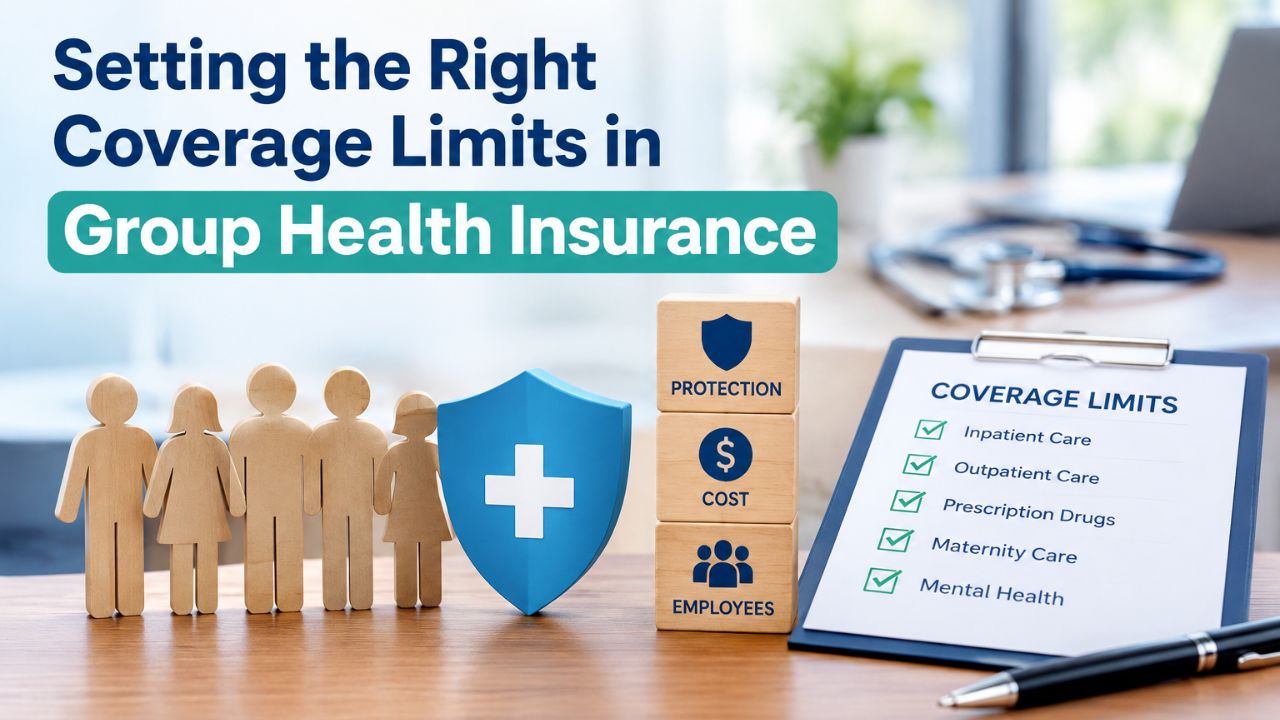
Group health insurance is a great employee benefit, but choosing the right coverage limit is just as important as offering the group insurance policy itself. The sum insured determines the financial protection employees receive during medical emergencies.
While lower coverage leads to higher out-of-pocket expenses, excessive coverage can increase the premiums. Once you set the right coverage limit, it helps balance employee well-being with the organisation’s budget.
How to Choose the Right Coverage Limits in Group Health Insurance?
Getting the right coverage limit for commercial insurance means finding a balance between protecting employees and managing insurance costs. Here are a few simple steps to help you decide:
- Assess Your Workforce Demographics: Find out the average age of employees, family size, number of dependents, and any specific healthcare requirements. A diverse workforce may require higher coverage limits.
- Review Medical Costs: You must consider the average cost of hospitalisation and treatments in the cities where your employees are based. Healthcare expenses can vary significantly across locations.
- Analyse Past Claim Trends: Review previous years’ claim data to understand the frequency and value of medical claims. This helps identify whether the existing sum insured is adequate.
- Consider Employee Benefits: If the policy includes benefits such as maternity cover, newborn cover, or parental insurance, ensure the coverage limit is sufficient to accommodate these expenses.
- Balance Coverage and Budget: Choose a sum insured that offers adequate protection without placing excessive financial pressure on the organisation. Compare different plans and premium options before making a decision.
- Offer Optional Top-Up Plans: Allow employees to increase their coverage by purchasing top-up or super top-up plans for an additional cost. This provides more flexibility to meet their individual needs.
- Review the Policy Regularly: Reassess the coverage limits annually or at policy renewal to ensure they continue to align with all the essential business and healthcare needs.
Why Does Choosing the Right GHI Sum Insured Matter?
Here is why choosing the right sum insured for the group health insurance matters:
- Protects Against Rising Medical Costs: Adequate coverage helps employees manage the costs of hospitalisation and treatment with minimal out-of-pocket expenses.
- Balances Coverage and Premiums: A suitable sum insured provides meaningful protection without significantly increasing the employer’s insurance costs.
- Improves Employee Financial Security: It allows employees to focus on recovery instead of worrying about paying large medical bills.
- Boosts Employee Satisfaction: Complete health coverage is a valuable workplace benefit that enhances employee morale and retention.
- Ensures Long-Term Relevance: Regularly reviewing the sum insured helps keep the policy aligned with medical inflation, workforce changes, and evolving healthcare needs.
GHI Sum Insured Recommendations for Different Company Sizes
| Company Size | Recommended GHI Sum Insured | Things to Consider |
| Startups | ₹3 lakh–₹5 lakh | ● Keep the coverage simple and cost-effective.
● Offer optional top-up plans for employees who need higher coverage. |
| Small Businesses | ₹4 lakh–₹6 lakh | ● Choose a balance between affordability and adequate protection.
● Consider adding benefits such as maternity cover and wellness programmes if the budget permits. |
| Mid-Sized & Large Companies | ₹5 lakh–₹10 lakh | ● Review past claim trends to determine the ideal coverage.
● Enhance the policy with top-up plans, critical illness cover, and parental coverage based on employee needs. |
Conclusions
The right sum insured ensures employees receive meaningful financial protection without stretching the organisation’s budget. Regular policy reviews can help maintain adequate coverage over time. Businesses can also consider group health insurance solutions offered by top providers such as TATA AIG, according to their specific needs.