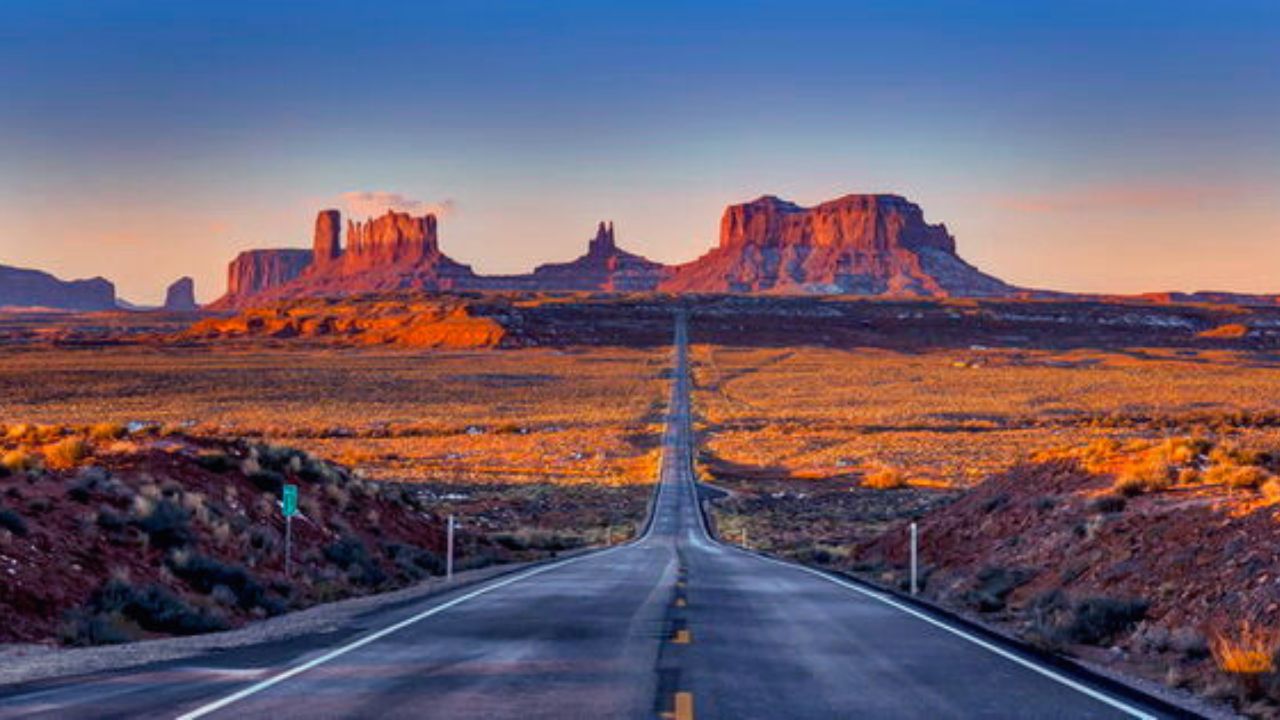
Few movie locations have become as recognizable as Forrest Gump Point in southern Utah. Located along US-163 near Monument Valley, this simple stretch of highway became famous after appearing in the 1994 movie Forrest Gump.
Today, travelers from around the world visit the location to experience the dramatic desert landscape and capture the famous road-to-the-Monument-Valley view. The road itself is ordinary, but the combination of the perfectly aligned highway, enormous sandstone formations, and open desert creates an unforgettable landscape.
If you’re planning a road trip through Utah and Arizona, Forrest Gump Point is an easy and worthwhile stop to add to your itinerary.
Where Is Forrest Gump Point?
Forrest Gump Point is located on US-163 in southeastern Utah, near Mexican Hat and north of Monument Valley Navajo Tribal Park. The viewpoint is around mile marker 13 and is situated along the highway rather than inside the main Monument Valley park.
The location is particularly convenient for travelers driving between Mexican Hat and Monument Valley, as the famous view appears directly along the route.
Forrest Gump Point is also part of the scenic US-163 corridor, an area known for spectacular desert scenery and dramatic sandstone formations.
Why Is Forrest Gump Point Famous?
The location became famous because it was used in a memorable sequence from the movie Forrest Gump, starring Tom Hanks.
In the film, Forrest has been running across the United States for an extended period before eventually stopping on this stretch of road. The movie’s wide shots showcase the highway stretching toward the distinctive formations of Monument Valley.
Following the movie’s popularity, visitors began seeking out the real-world location. The spot eventually became widely known as Forrest Gump Point or Forrest Gump Hill.
Interestingly, there isn’t a large visitor center or traditional tourist attraction here. It’s essentially a roadside viewpoint whose fame comes from its cinematic history and spectacular scenery.
What Can You See From Forrest Gump Point?
The biggest attraction is the view itself.
From the highway, you can see a long, almost perfectly straight section of US-163 leading toward the sandstone formations of Monument Valley. The East and West Mitten Buttes and Merrick Butte are among the prominent formations visible in the distance.
The landscape combines:
- A long desert highway
- Red and orange sandstone formations
- Vast open desert
- Monument Valley’s distinctive buttes
- Dramatic Southwestern skies
The composition is one reason this location has become particularly popular among photographers and movie fans.
Related: This is Why Forrest Gump Monument Valley SIs o Famous
How to Get to Forrest Gump Point?
The easiest way to reach Forrest Gump Point is by car.
If you’re traveling from Monument Valley toward Mexican Hat, follow US-163 north. The famous viewpoint is approximately 13 miles north of the Monument Valley area. If you’re coming from Mexican Hat, you’ll encounter it while driving south toward Monument Valley.
Because it is located along a major highway, there is no hiking trail or complicated entrance procedure. Travelers generally pull completely off the highway at a safe roadside area to enjoy the scenery.
For navigation, searching “Forrest Gump Point” in a modern mapping application is generally the easiest option.
Is Forrest Gump Point Free to Visit?
Yes. Unlike Monument Valley Navajo Tribal Park, Forrest Gump Point itself is a roadside viewpoint and does not require an admission ticket.
However, if you continue into Monument Valley Navajo Tribal Park, separate park admission and other visitor arrangements may apply.
It’s useful to think of the two as separate stops:
Forrest Gump Point: Roadside viewpoint outside the main park
Monument Valley Navajo Tribal Park: Larger protected area with viewpoints, scenic drives, and cultural experiences
Best Time to Visit Forrest Gump Point
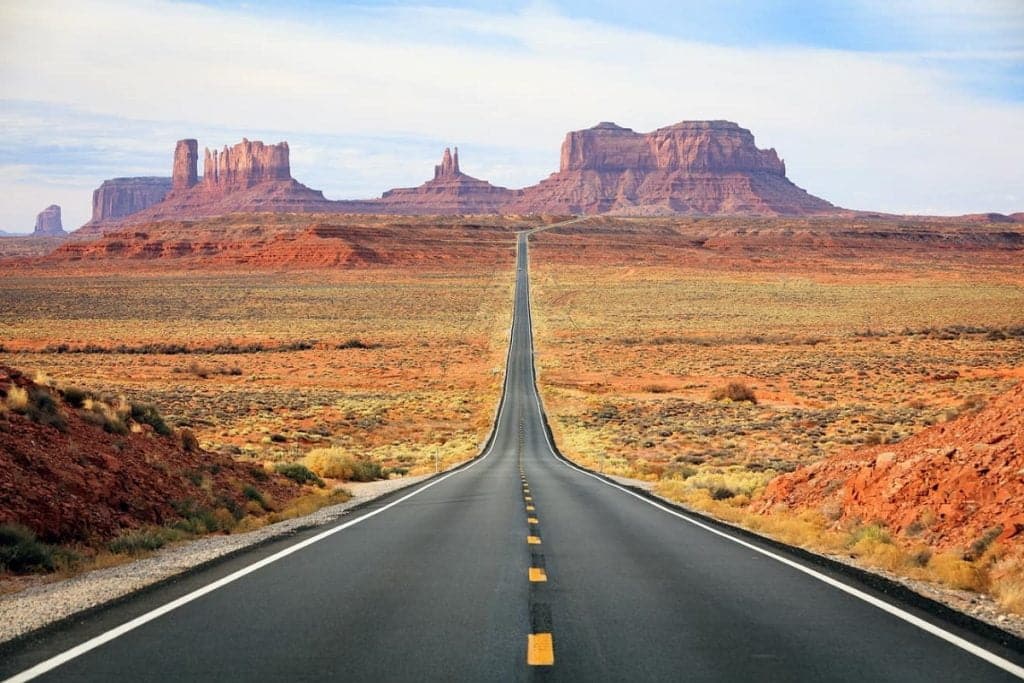
For photography, early morning and late afternoon can provide especially attractive light across the Monument Valley landscape.
Morning visits may also offer a quieter experience compared with busier periods of the day.
Sunrise
Early morning light can give the sandstone formations warm tones while producing long shadows across the desert.
Afternoon
As the sun moves lower, the landscape can become increasingly dramatic, especially when clouds add texture to the sky.
Midday
The viewpoint is still impressive during the middle of the day, although the stronger overhead sunlight can create harsher shadows.
READ: Best Things to Do in Badlands National Park
Photography Tips for Forrest Gump Point
Forrest Gump Point is particularly popular with photographers because the road naturally creates a strong leading line toward Monument Valley.
For the best results:
- Use the highway as a leading line toward the buttes.
- Try shooting during softer morning or evening light.
- Use a wide-angle lens for expansive landscape photographs.
- Capture both landscape and portrait orientations.
- Include the surrounding desert to provide a sense of scale.
Most importantly, do not stand in the roadway to recreate the movie shot. US-163 is an active highway with regular traffic. Visit Utah specifically warns travelers to photograph from the shoulder rather than from the middle of the road.
How Much Time Do You Need at Forrest Gump Point?
You don’t need an entire day to visit the viewpoint.
For many travelers, 15–30 minutes is enough to stop, enjoy the scenery, take photographs, and continue the road trip.
However, Forrest Gump Point makes much more sense as part of a larger Monument Valley itinerary. If you have several hours available, combine it with other attractions in the region rather than making it your only destination.
Places to Visit Near Forrest Gump Point
One of the best things about visiting this part of Utah is the number of remarkable landscapes nearby.
Monument Valley Navajo Tribal Park
Monument Valley is the obvious addition to your itinerary. Its enormous sandstone buttes and mesas are among the most recognizable landscapes in the American Southwest.
The park offers scenic viewpoints and opportunities to learn more about the area’s landscape and Navajo culture.
Mexican Hat Rock
Near the town of Mexican Hat is the unusual rock formation that gives the community its name. Its distinctive shape makes it an interesting quick stop while traveling along US-163.
Goosenecks State Park
Goosenecks State Park offers spectacular views of the deeply carved San Juan River canyon. It’s another excellent landscape stop for travelers exploring southeastern Utah.
Valley of the Gods
For travelers looking for a quieter desert experience, Valley of the Gods offers striking sandstone formations and expansive scenery.
These locations can be combined into a road trip through southeastern Utah, making the area much more rewarding than simply stopping at Forrest Gump Point.
Read More: Best Things to Do in San Antonio, Texas
Is Forrest Gump Point Worth Visiting?
Yes, especially if you’re already traveling through Monument Valley.
For movie fans, the connection to Forrest Gump makes the location special. For photographers, the combination of the road and Monument Valley creates an exceptional composition. And for road-trip travelers, it is a quick stop that requires very little extra time when you’re already traveling along US-163.
However, it’s important to set realistic expectations. This isn’t a traditional attraction with a large parking area, museum, restaurant, or visitor center. The attraction is essentially the landscape and the cinematic connection.
Important Safety Advice
The biggest consideration when visiting Forrest Gump Point is road safety.
This is an active highway—not a pedestrian attraction. Visit Utah describes the location as a highly trafficked road and advises visitors to take photographs from the shoulder.
When stopping:
- Pull completely off the highway in a safe location.
- Stay well away from moving traffic.
- Watch children and other members of your group closely.
- Never walk into traffic for a photograph.
- Follow posted road signs and local regulations.
- Leave the area if traffic or conditions make stopping unsafe.
A great travel photograph isn’t worth putting yourself or other road users at risk.
Frequently Asked Questions (FAQs0 About Forrest Gump Point
Planning a visit to Forrest Gump Point? These frequently asked questions cover essential details about its location, accessibility, best time to visit, photography, nearby attractions, and travel tips to help you enjoy this iconic Monument Valley destination.
Where is Forrest Gump Point located?
Forrest Gump Point is on US-163 in southern Utah, near Mexican Hat and north of Monument Valley Navajo Tribal Park. It is around mile marker 13.
Is Forrest Gump Point in Utah or Arizona?
The famous roadside location is in Utah, although Monument Valley itself extends across the Utah-Arizona region.
Is Forrest Gump Point free?
Yes. The roadside viewpoint itself does not charge an admission fee.
How far is Forrest Gump Point from Monument Valley?
The viewpoint is roughly 13 miles north of the Monument Valley visitor center area along US-163.
Can I take pictures at Forrest Gump Point?
Yes, but photographs should be taken safely from the roadside shoulder. Do not enter the active highway for photographs.
What is the best time to visit Forrest Gump Point?
Early morning and late afternoon are generally excellent times for landscape photography because of the softer light and warmer tones on the sandstone formations.
Final Thoughts
Forrest Gump Point proves that a seemingly ordinary stretch of highway can become a world-famous travel destination when combined with an unforgettable movie scene and extraordinary scenery.
Located along US-163 near Monument Valley, the viewpoint offers travelers a chance to see the landscape made famous by Forrest Gump while enjoying one of the most memorable road-trip views in the American Southwest.
If you’re planning a Utah and Arizona road trip, add Forrest Gump Point to your route—but don’t stop there. Give yourself enough time to explore Monument Valley, the surrounding desert landscapes, and the cultural heritage of the region.