
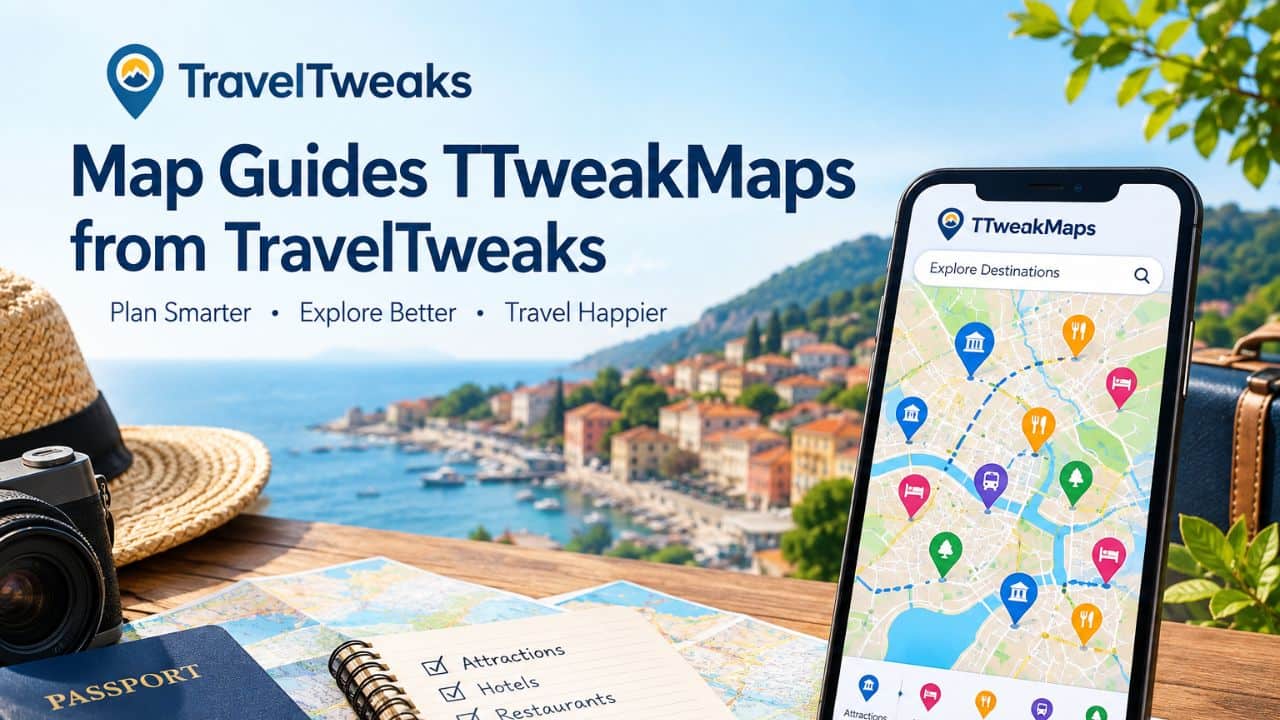
Planning a trip can be exciting, but figuring out where everything is located can sometimes make the process complicated. Attractions, hotels, restaurants, transportation hubs, neighborhoods, and popular landmarks may all be spread across a large destination.
This is where map guides TTweakMaps from TravelTweaks can be useful. By combining travel information with a visual map-based approach, travelers can better understand destinations, identify places they want to visit, and organize their trips more efficiently.
Whether you are preparing for a weekend city break, a family vacation, or a longer international trip, a well-organized travel map can make destination research much easier.
What are TTweakMaps from TravelTweaks?
TTweakMaps can be understood as map-focused travel guides designed to help travelers explore destinations visually. Instead of relying entirely on written descriptions, travelers can use a map-based perspective to understand where attractions and other points of interest are located.
Travel information is often easier to understand when geographic relationships are clear. For example, knowing that two attractions are close to each other can help you plan them for the same day.
A destination map can also provide a useful starting point for researching neighborhoods, accommodation areas, restaurants, transportation options, and sightseeing locations.
How TTweakMaps Help Travelers?
A travel map can turn a long list of attractions into something much easier to organize.
Rather than simply writing down places to visit, you can consider their locations and distances from one another. This can help you build a more practical itinerary.
Some of the ways map guides can help include:
- Locating major tourist attractions
- Understanding the layout of a destination
- Identifying nearby points of interest
- Planning sightseeing routes
- Comparing different areas of a city
- Finding attractions close to your hotel
- Organizing activities geographically
- Reducing unnecessary travel between locations
For travelers visiting a destination for the first time, this visual approach can be particularly helpful.
What Information Can Travel Map Guides Include?
The exact information available can vary depending on the destination and map guide. However, travel maps commonly focus on places and services that visitors are likely to need.
Tourist Attractions
Maps can help travelers identify famous landmarks, museums, historic sites, viewpoints, beaches, parks, and other attractions.
Hotels and Accommodation
Understanding where hotels are located can help travelers choose accommodation that fits their itinerary.
For example, someone interested primarily in museums may want to stay in a different area from a traveler focused on beaches or nightlife.
Restaurants and Cafés
Food is an important part of many trips. Mapping restaurants and cafés can make it easier to identify dining options close to sightseeing locations.
Transportation
Transportation hubs such as airports, train stations, metro stations, and bus terminals can provide important geographic context when planning a trip.
Neighborhoods
A map can also help travelers understand the relationship between different neighborhoods. This can be particularly useful in large cities where areas may have very different atmospheres and attractions.
How to Use TTweakMaps for Trip Planning?
Using a map effectively doesn’t have to be complicated. A simple process can help turn destination research into a workable itinerary.
Choose Your Destination
Start by deciding where you want to travel. Once you have selected your destination, identify the attractions and experiences that are most important to you.
Avoid trying to plan every minute of your trip immediately. Begin with the places you definitely want to visit.
Explore the Map
Look at where your chosen attractions are located.
Pay attention to clusters of attractions. If several places are located within the same area, they may be convenient to visit on the same day.
Group Nearby Attractions
Geographic grouping is one of the simplest ways to improve a travel itinerary.
For example, instead of traveling across an entire city several times, you could organize your schedule around specific areas.
A basic itinerary might look like:
- Day 1: Historic district
- Day 2: Downtown attractions
- Day 3: Museums and cultural sites
- Day 4: Parks and outdoor attractions
The exact structure depends on the destination, but the principle remains the same: organize activities according to location whenever practical.
Build Your Travel Route
After grouping attractions, consider how you will move between them.
Check walking distances, public transportation options, driving times, and other practical factors before finalizing your schedule.
Benefits of Using TravelTweaks Map Guides
Map-based travel planning offers several practical benefits.
Easier Destination Navigation
A visual map provides geographic context that a written list cannot always communicate.
You can see where attractions are located in relation to one another rather than simply reading their names.
Better Itinerary Planning
Maps can help you organize activities according to location, making your itinerary easier to understand.
Visual Destination Research
Some travelers find it easier to understand a destination visually. A map can show neighborhoods, attractions, transportation points, and other locations at the same time.
More Efficient Travel Days
Planning attractions that are close together can potentially reduce unnecessary travel time.
Easier Attraction Discovery
A map may also reveal interesting places located near attractions you already plan to visit.
For example, you might discover a restaurant, park, viewpoint, or museum near another destination on your itinerary.
TTweakMaps vs. Traditional Travel Guides
Traditional travel guides remain useful because they can provide detailed descriptions, recommendations, historical information, and practical advice.
However, maps offer a different type of information.
| Feature | Traditional Travel Guide | Map Guide |
|---|---|---|
| Destination descriptions | Strong | Limited |
| Geographic context | Limited | Strong |
| Attraction locations | Usually listed | Visually displayed |
| Route planning | Basic | More visual |
| Neighborhood understanding | Variable | Strong |
| Itinerary organization | Written | Location-based |
| Attraction discovery | Search-based | Map-based |
For this reason, travelers don’t necessarily have to choose between the two.
Using written travel information alongside a map can provide a more complete planning experience.
How TTweakMaps Can Improve Your Travel Itinerary?
A good itinerary should balance sightseeing with realistic travel time.
One common mistake travelers make is creating a schedule based entirely on attraction popularity without considering geography.
Suppose five attractions are on your must-see list. If three are located in the same area and two are several miles away, it may make sense to visit the nearby attractions together.
A map can help you identify these relationships.
You can also use geographic information to plan:
- Morning sightseeing
- Lunch locations
- Afternoon attractions
- Evening activities
- Transportation connections
- Hotel return routes
This approach can make an itinerary more practical without requiring travelers to remove experiences from their plans.
Best Ways to Use Map Guides Before Your Trip
The best time to start using a destination map is during the research stage.
Research Your Destination
Begin by becoming familiar with the overall layout of the city or region.
Mark Your Priority Attractions
Create a list of the places you consider essential.
Check Distances
Look at the approximate distances between major locations.
Choose Accommodation Carefully
Consider whether your hotel location works well with your planned activities.
Organize Your Days
Group attractions according to geographic proximity when it makes sense.
Leave Room for Flexibility
Don’t make your schedule so rigid that you cannot adjust it.
Weather, transportation delays, attraction opening hours, and unexpected discoveries can all affect travel plans.
Using TTweakMaps While Traveling
Travel maps aren’t only useful before departure.
They can also serve as a quick reference while you’re exploring a destination.
For example, after visiting a major attraction, you can check what other points of interest are nearby. This can help you decide what to do next without returning to your hotel or spending significant time researching from scratch.
Maps can be particularly useful when:
- Exploring an unfamiliar neighborhood
- Looking for nearby attractions
- Finding restaurants
- Planning your next stop
- Understanding transportation connections
- Adjusting your itinerary
Having a geographic overview can make spontaneous travel decisions easier.
Tips for Getting More From TravelTweaks Maps
To make the most of a travel map guide, focus on how locations relate to your overall trip.
Start With Must-See Places
Identify the attractions that are most important to you before filling your itinerary with additional activities.
Look Beyond Individual Attractions
Don’t only look at the destination itself. Explore the surrounding area for additional points of interest.
Consider Travel Time
Two attractions may appear relatively close on a map but could take longer to reach because of traffic, public transportation, crowds, or terrain.
Group Activities Geographically
Whenever practical, plan activities in the same area for the same day.
Keep Alternatives Available
Have a few backup attractions available in case weather or other circumstances affect your original plans.
Are TTweakMaps Useful for First-Time Travelers?
Map guides can be particularly helpful for first-time visitors because unfamiliar destinations can initially feel confusing.
A traveler may know the names of several popular attractions without understanding where they are located.
A map provides that missing context.
For example, someone visiting a large city might discover that several attractions they originally planned for separate days are actually located relatively close together.
At the same time, another attraction that looks convenient on a written list may be located much farther away.
Understanding these relationships before traveling can help create a more realistic schedule.
How Map Guides Can Help Families
Families often need to consider more factors when planning a day of sightseeing.
Walking distances, meal breaks, transportation, and children’s interests can all influence the itinerary.
A map can help parents organize attractions into manageable areas rather than crossing a city repeatedly.
For example, a family could dedicate one day to a particular neighborhood and combine sightseeing with nearby restaurants and family-friendly activities.
This can make the day easier to manage while leaving room for breaks.
How Map Guides Can Help Solo Travelers
Solo travelers can also benefit from having a clear geographic understanding of a destination.
A map can help with route planning and provide a quick overview of nearby attractions.
Solo travelers may also want to consider practical factors such as transportation access and the location of their accommodation when creating an itinerary.
The map itself should be treated as a planning tool rather than a substitute for checking current local conditions.
Popular Destinations to Explore With Travel Maps
Map-based guides can be especially useful for large and complex destinations.
Travelers researching places such as New York City, Paris, Rome, Tokyo, London, Dubai, Barcelona, and Istanbul may find geographic planning helpful because these destinations contain numerous attractions spread across different areas.
For smaller destinations, maps can still be useful for understanding:
- Scenic routes
- Beaches
- Historic districts
- Natural attractions
- Local restaurants
- Hotels
- Transportation points
The usefulness of a map ultimately depends on the complexity of the destination and the type of trip you’re planning.
Important Things to Check Beyond a Travel Map
Although a map is an excellent planning resource, it shouldn’t be your only source of travel information.
Before visiting a location, check current information about:
- Opening hours
- Admission requirements
- Transportation schedules
- Road conditions
- Weather
- Local regulations
- Temporary closures
- Reservation requirements
Information can change after a map or travel guide is published.
For that reason, use TTweakMaps from TravelTweaks as part of a broader travel-planning process rather than relying on a map alone.
Frequently Asked Questions About TTweakMaps
What are TTweakMaps from TravelTweaks?
TTweakMaps are map-focused travel guides associated with TravelTweaks that can help travelers understand destinations and organize attractions geographically.
How do TravelTweaks map guides help with travel planning?
They provide a visual way to understand where attractions and other travel-related locations are situated, which can support itinerary and route planning.
Can TTweakMaps help create a travel itinerary?
Yes. Travelers can use geographic information to group nearby attractions and organize activities into practical daily routes.
What can you find on a travel map guide?
Depending on the destination, a map guide may highlight attractions, neighborhoods, accommodation, restaurants, transportation locations, landmarks, and other points of interest.
Are map guides useful for first-time travelers?
Yes. A visual overview can help first-time visitors understand the layout of an unfamiliar destination and organize their sightseeing plans.
Should I rely only on a travel map?
No. Maps are useful planning tools, but travelers should also verify current opening hours, transportation information, weather, closures, and local requirements before visiting.
Can map guides help reduce travel time?
Planning attractions according to location can help reduce unnecessary movement between different parts of a destination, although actual travel times depend on transportation, traffic, crowds, and other conditions.
Final Thoughts
Map guides TTweakMaps from TravelTweaks can provide a practical visual approach to destination research and travel planning. Instead of looking at attractions as a simple list, travelers can consider where each place is located and how different destinations fit together.
From identifying nearby attractions to organizing daily sightseeing routes, map-based planning can make it easier to build a realistic itinerary.
The most effective approach is to combine a travel map with detailed destination research and current local information. By doing so, travelers can better understand their destination, organize their time, and leave enough flexibility for unexpected experiences along the way.