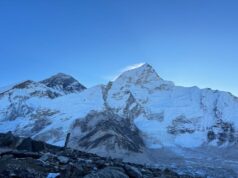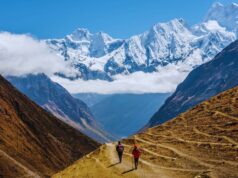
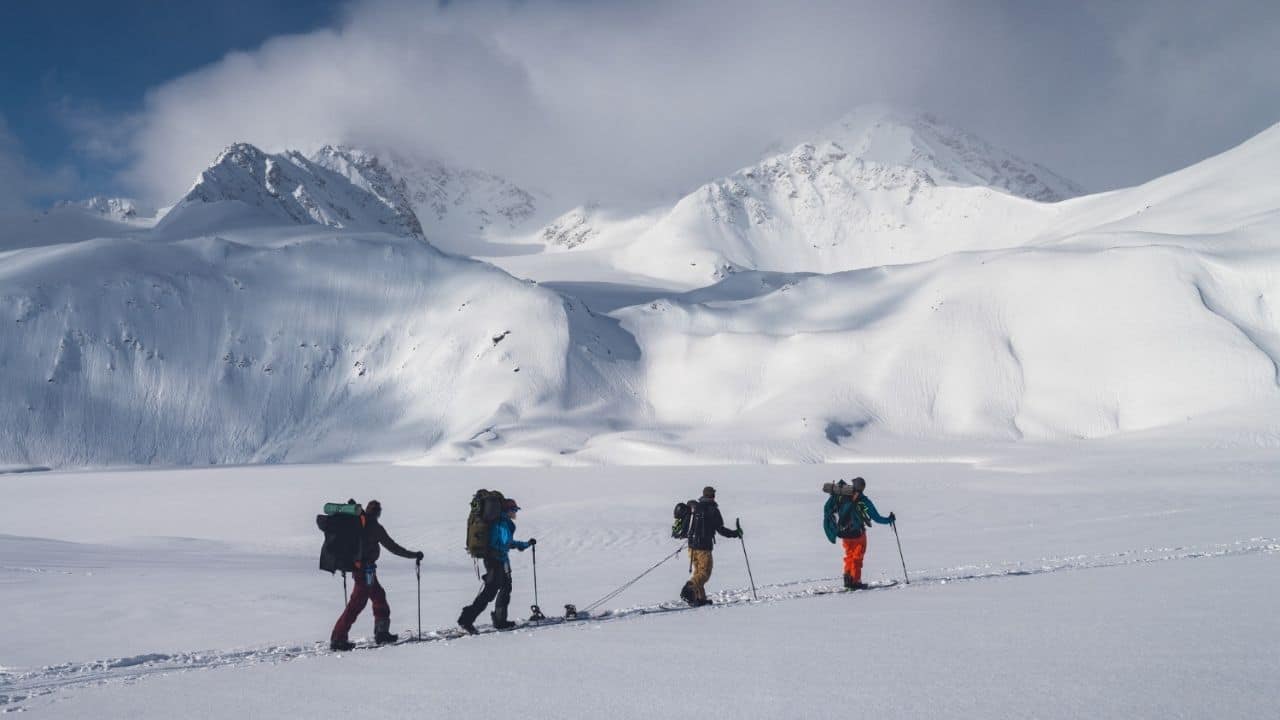
The trek to K2 Base Camp is one of the world’s most thrilling adventures and a true once-in-a-lifetime experience. More than just a trek, it feels like a spiritual journey, walking and camping among the colossal giants of the Karakoram Mountains.
The adventure begins in Islamabad, Pakistan’s capital city. From here, a spectacular 40-minute flight takes you to Skardu, the vibrant heart of northern Pakistan. Skardu serves as the main gateway to the Karakoram Range and is the logistical hub for all major trekking and mountaineering expeditions in the region.
After exploring Skardu, the journey continues with an epic jeep drive to Askoli, passing through the breathtaking Shigar Valley alongside the Braldu (Baltoro) River. Askoli marks the starting point of the trek. The walk up to Paju Camp is demanding but manageable. Beyond Paju, the real adventure begins as you step onto the legendary Baltoro Glacier.
For the next 8–10 days, trekking and camping take place on ice and rocky glacial terrain, surrounded by some of the world’s highest and most dramatic peaks. After reaching K2 Base Camp, trekkers can either return via the same route or choose the far more challenging and rewarding option of crossing Gondogoro La Pass (5,585m), descending into the stunning Hushe Valley.
Unlike the Everest Base Camp Trek, the K2 Base Camp Trek is far more remote, rugged, and demanding. Harsh weather, rough road access, intense sun exposure, rocky glaciers, and frequent stream crossings make this trek physically and mentally challenging. However, these challenges are rewarded with some of the most spectacular mountain scenery on Earth. The trail is also far less crowded than Everest Base Camp, making it a perfect choice for serious adventure seekers looking for solitude and raw wilderness.
K2 Base Camp Trek Highlights
The K2 Base Camp Trek is not just about reaching the foot of the world’s second-highest mountain; it is a cultural and spiritual journey, offering deep insight into Pakistan’s mountain life and traditions.
- Explore Islamabad, including the iconic Faisal Mosque and local cuisine
- Discover Skardu, visiting the ancient Kharpocho Fort and bustling local markets
- Scenic jeep drive to Askoli through the beautiful Shigar Valley
- Breathtaking views of Trango Towers and Uli Biaho, among the world’s highest rock towers
- Stunning sights of Masherbrum, Muztagh Tower, and surrounding peaks
- Experience Concordia, famously known as the “Throne Room of the Mountain Gods”
- Panoramic views of K2, Broad Peak, Gasherbrum I & II, Chogolisa, Mitre Peak, and hundreds of peaks above 6,000m and 7,000m
- Cultural immersion with local porters and mountain guides
- Practical Information
- Total Distance: Approx. 180 km (through trek)
- Total Duration: 18–21 days
- Trekking Days: 14–16 days
- Total Elevation Gain (with undulations): ~10,000 m
- K2 Base Camp Altitude: 5,120 m
- Highest Point: 5,585 m (Gondogoro La Pass)
- Difficulty Level: Strenuous
Difficulty & Challenges
The K2 Base Camp Trek is widely considered one of the most challenging treks in the world. Harsh terrain, long trekking days, and sustained high altitude make it suitable only for experienced and well-prepared trekkers.
The trail crosses rocky paths, glaciers, and uneven ground, often above 5,000 meters, where altitude sickness is a serious risk. Weather conditions are extreme and unpredictable, with freezing temperatures, snowstorms, and strong winds common throughout the trek.
Crossing Gondogoro La Pass adds another major challenge. The ascent is steep and technical, involving 7–10 hours of continuous climbing, demanding excellent physical fitness, balance, and mental resilience.
Compared to treks like Everest Base Camp or Mount Kilimanjaro, the K2 Base Camp Trek is significantly more demanding due to its tougher terrain, higher exposure to altitude, remoteness, and severe environmental conditions. Proper training, acclimatization, and high-quality gear are essential for completing this journey safely.
Visa, Permits & Logistics
The K2 Base Camp Trek lies in a restricted border zone regulated by the Government of Pakistan. Independent trekking is not allowed, and all trekkers must travel through a licensed local tour operator.
Pakistan issues a special visa category for this region called the “Mountaineering & Trekking Visa”, rather than a standard tourist visa. The process is more detailed and time-consuming, so trekkers should apply at least 60 days before the departure date.
To apply for this visa, you will need:
- A Sponsor Letter from a registered Pakistani tour company
- A special trekking permit issued through the same licensed operator
Unlike Nepal, the K2 region has no teahouses or lodges. Everything—from food and tents to kitchen equipment—must be carried along. The trek operates like a moving caravan, involving trekkers, guides, cooks, porters, horses, and horsemen. This makes logistics complex but also adds to the authenticity of the experience.
Our recommended company for this trek is Chogori Adventure, a trusted and experienced local operator.
Weather & Best Time to Trek
- Main Trekking Season: Mid-June to late September
- Best Time for Gondogoro La Pass: July & August
- Classic K2 Base Camp Trek: Late June to early October
Peak clarity is usually during July and August, offering longer daylight hours and better access across glaciers and passes. However, weather in the Karakoram is always unpredictable, expect sunshine, intense heat at lower camps, sudden storms, and occasional road blockages due to flooding.
Early and late season treks are quieter and colder, but often provide clearer skies and fewer crowds.
Drinking Water
Most drinking water is sourced from mountain streams and springs. Trekking staff provide boiled water after each meal, but it is highly recommended to carry a water purifier or purification tablets for additional safety.
Accommodation & Food
Accommodation throughout the trek is in high-quality camping tents, set up at some of the most scenic campsites in the world. Almost every campsite offers breathtaking views of 7,000m and 8,000m peaks, waking up inside your tent feels like sleeping inside a mountain amphitheater.
Meals are surprisingly varied and nourishing, including:
- Lentils (daal)
- Chicken curry
- Fresh vegetables
- Parathas
- Rice dishes
- Noodles and pasta
The food is designed to keep energy levels high during long trekking days.
Electricity & Internet
Most operators provide electric generators for larger groups and solar charging systems for smaller teams. Limited charging for cameras and phones is usually available.
Internet connectivity in northern Pakistan is generally weak. However, there is a signal tower at Concordia, and trekkers can purchase an SCOM 4G tourist SIM card in Skardu. Connectivity remains unreliable and should not be depended on for regular communication.
K2 Base Camp Trek Itinerary
Arrival & Preparation
Day 1: Arrival in Islamabad
Day 2: Fly to Skardu
Day 3: Market day and sightseeing in Skardu
Trekking Days
Day 4: Drive from Skardu to Askole
Day 5: Askole to Jhula Camp (3,150m)
Day 6: Jhula to Paju Camp (3,383m)
Day 7: Paju to Khoburtse (3,566m)
Day 8: Khoburtse to Urdukas (4,130m)
Day 9: Urdukas to Goro II (4,250m)
Day 10: Goro II to Concordia (4,600m)
Day 11: Concordia to K2 Base Camp (5,000m) and return
Day 12: Rest day at Concordia
Day 13: Concordia to Ali Camp (5,000m)
Day 14: Ali Camp to Gondogoro La Pass (5,600m) to Kuispang (4,700m)
Day 15: Kuispang to Saicho (3,435m)
Day 16: Saicho to Hushe, drive to Skardu
Post-Trek
Day 17: Rest day in Skardu
Day 18: Extra rest / sightseeing in Skardu
Day 19: Fly to Islamabad
Day 20: Contingency day in Islamabad
Day 21: Final departure